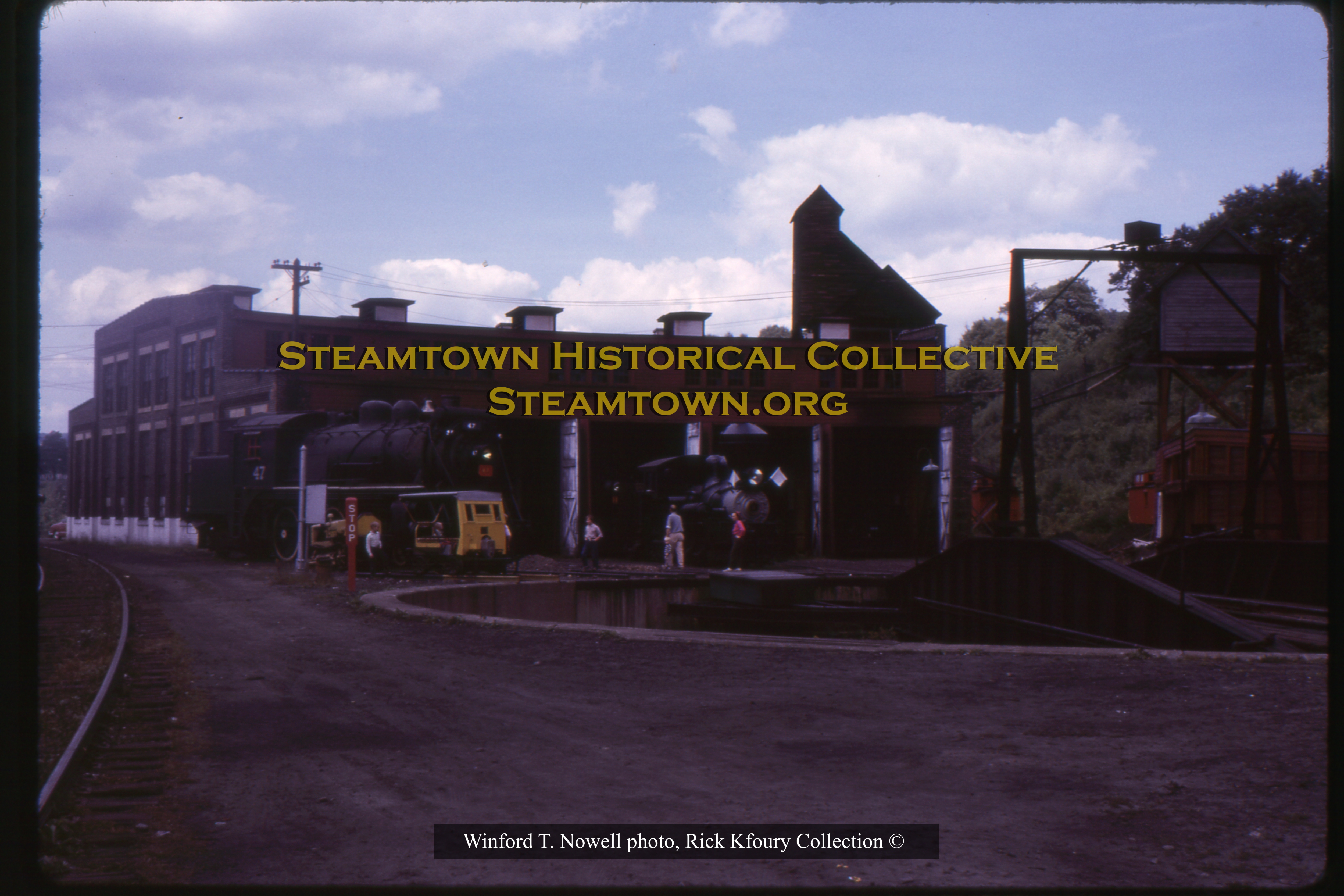
Following the state of New Hampshire’s vote to kill the plan for a state-funded Steamtown, U.S.A. museum in Keene, F. Nelson Blount and his associates worked quickly to prepare for the rest of the year. It was announced that Steamtown, U.S.A. would open for the first time on May 19 at Blount’s roundhouse and engine facility at North Walpole, New Hampshire. The collection at North Walpole in 1963 included 25 steam locomotives, eight cabooses, a steam shovel, steam roller, steam crane, traction engine, wooden railroad snowplow, and various passenger cars and pieces of rolling stock.
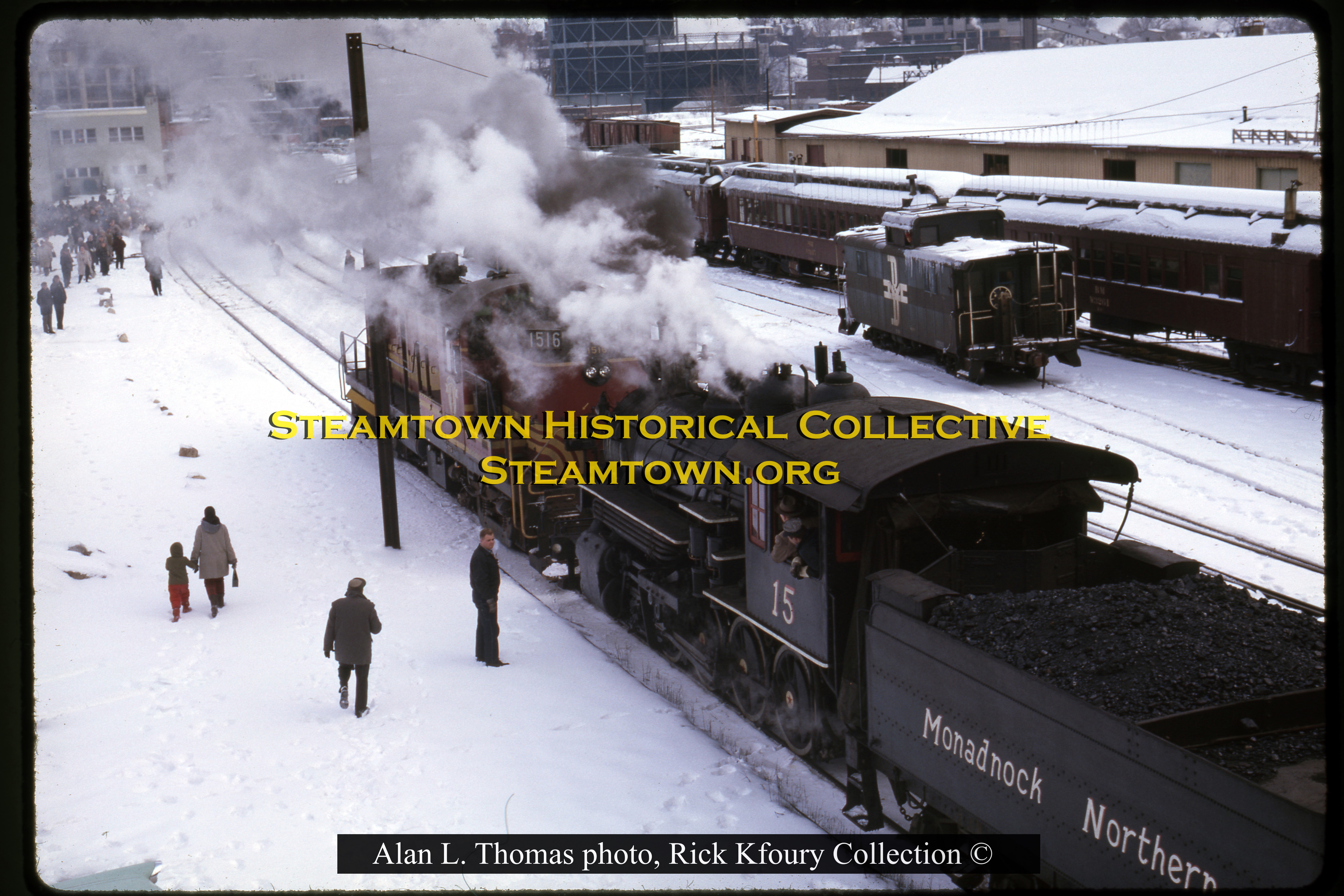
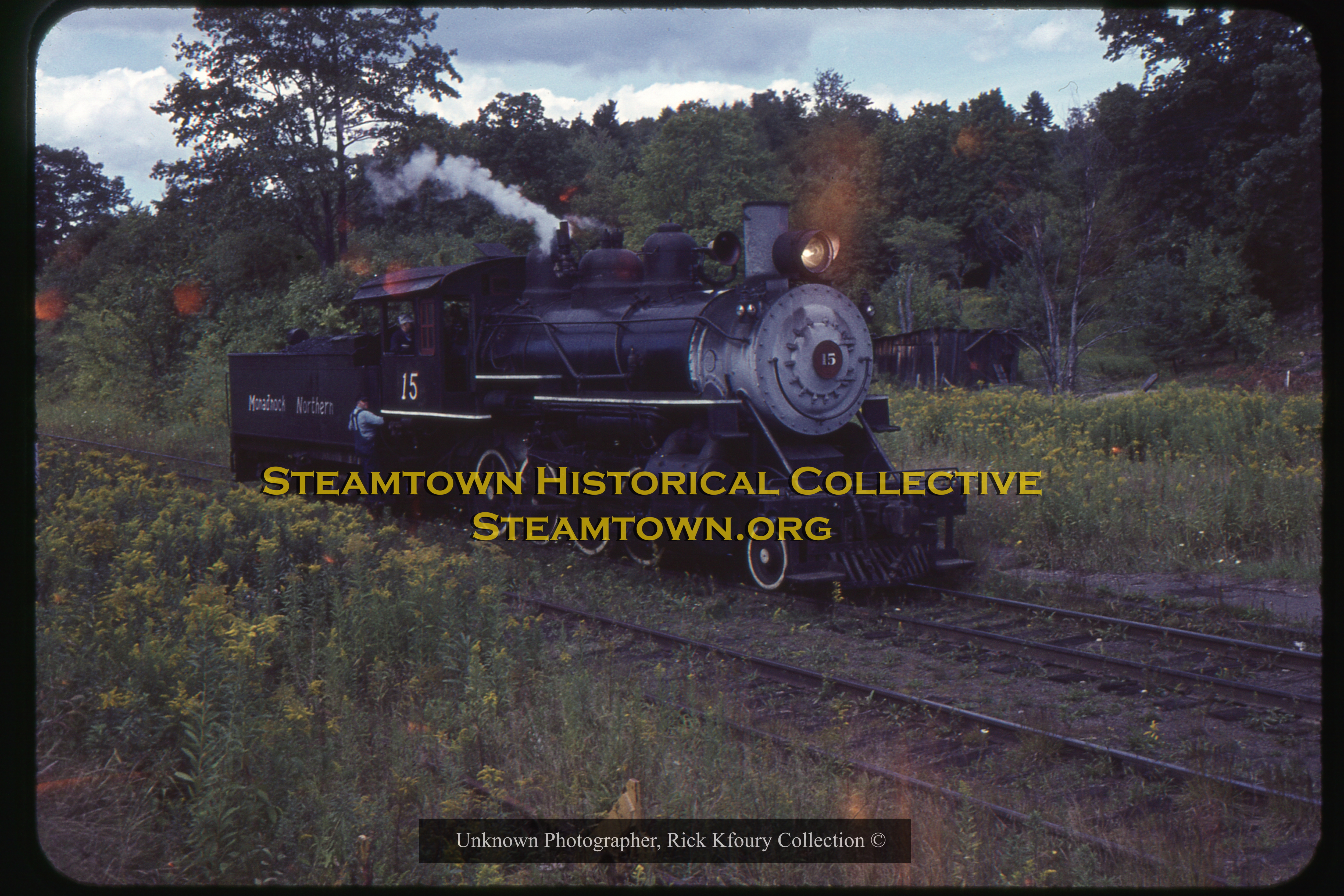
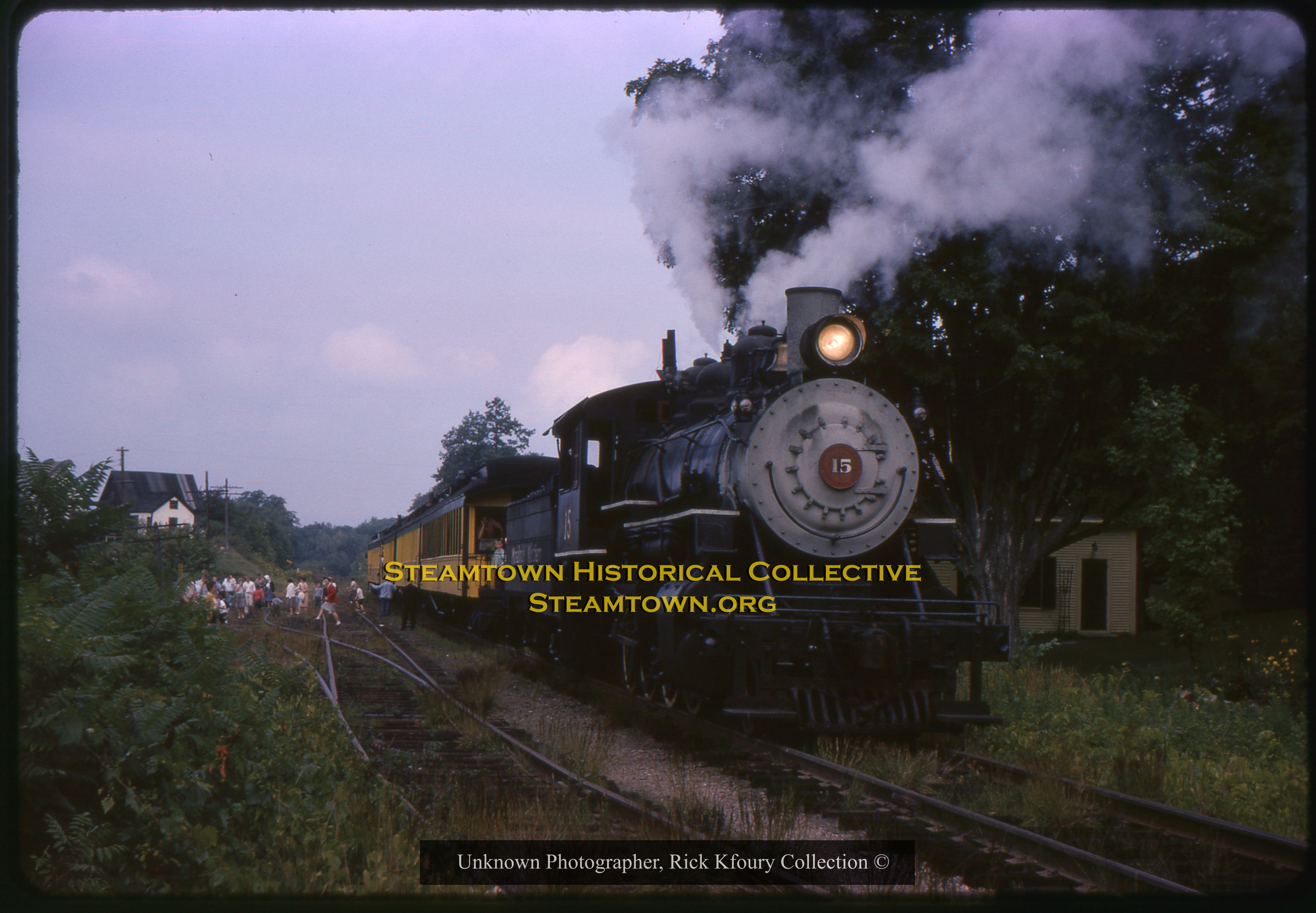
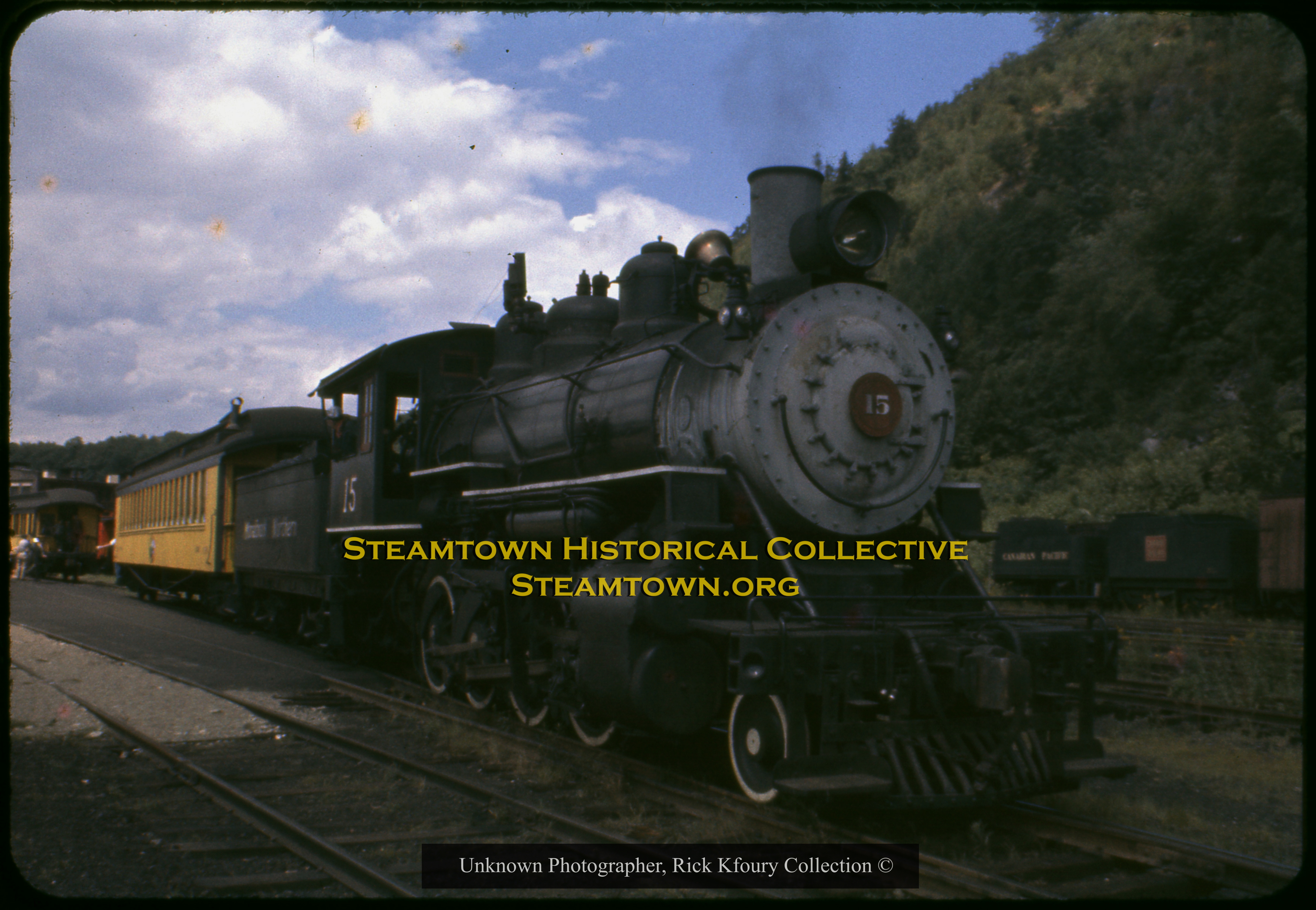
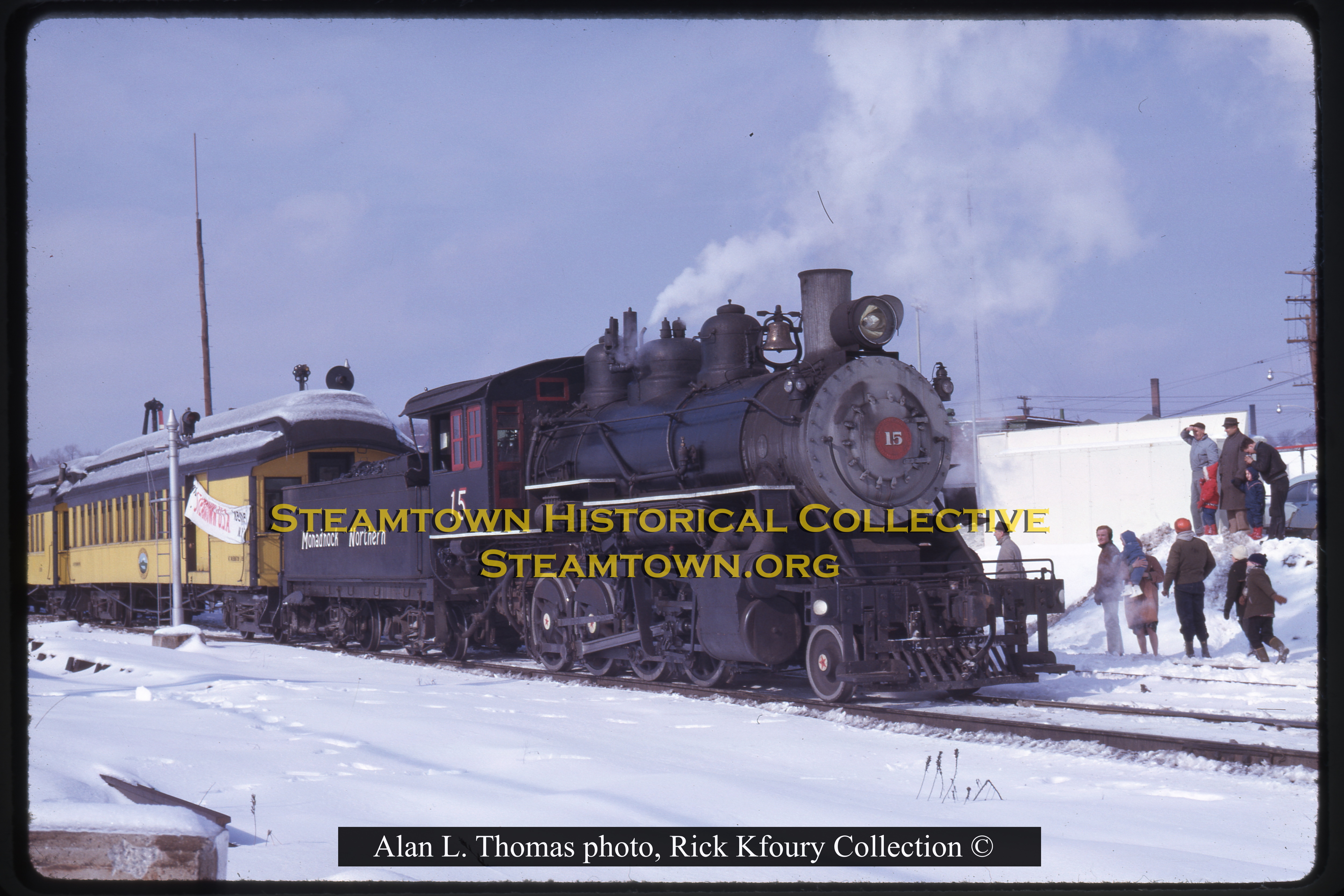
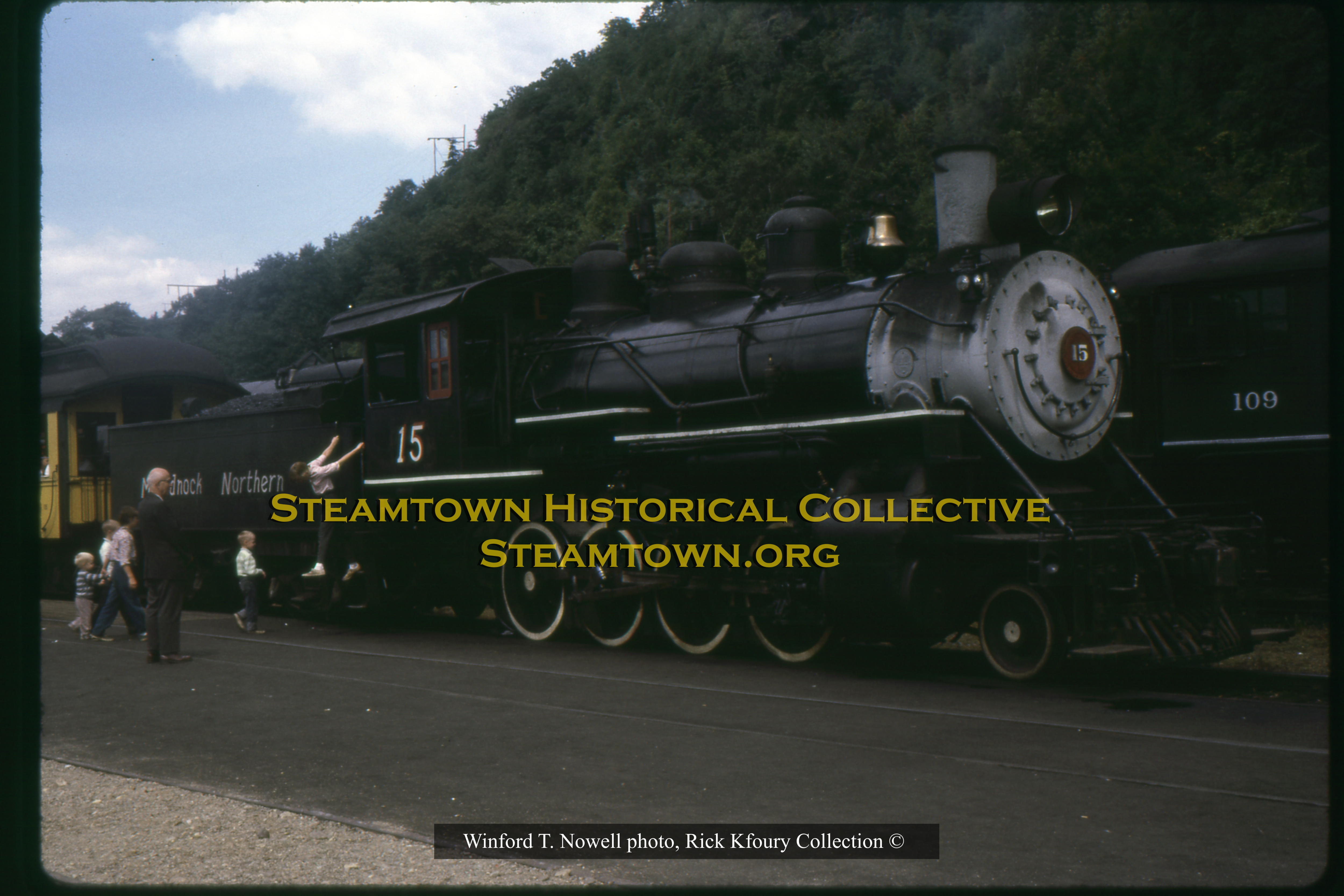
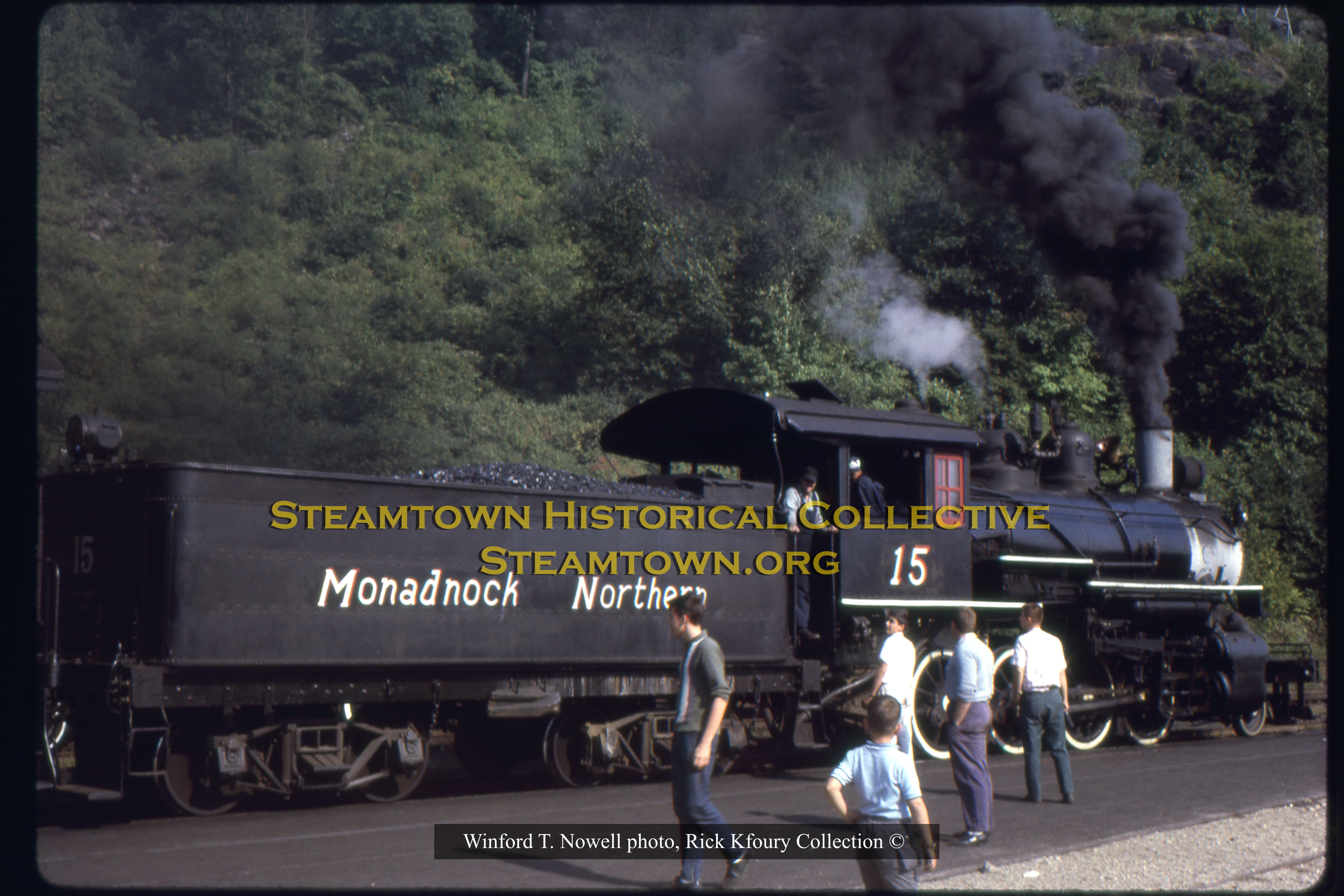
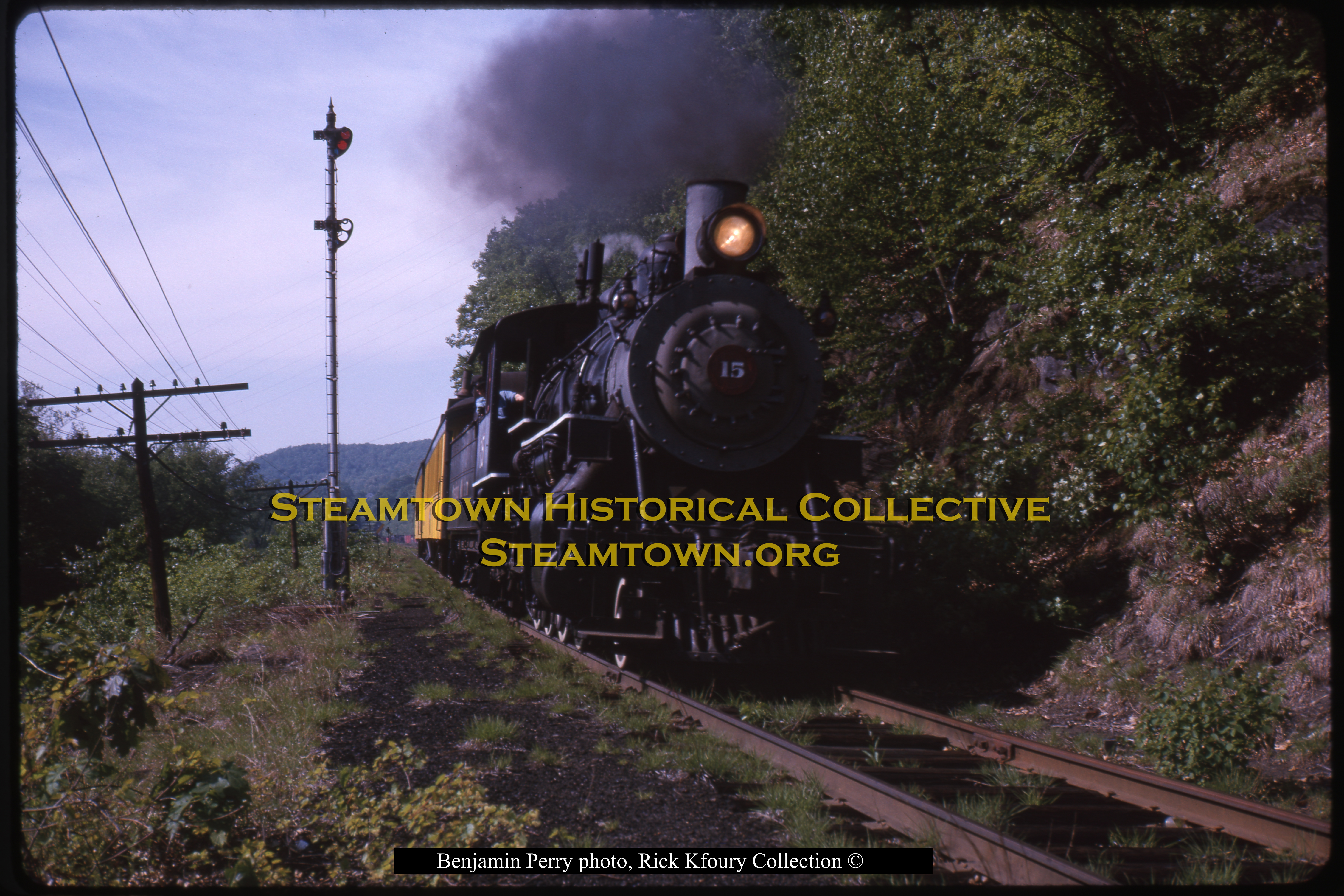
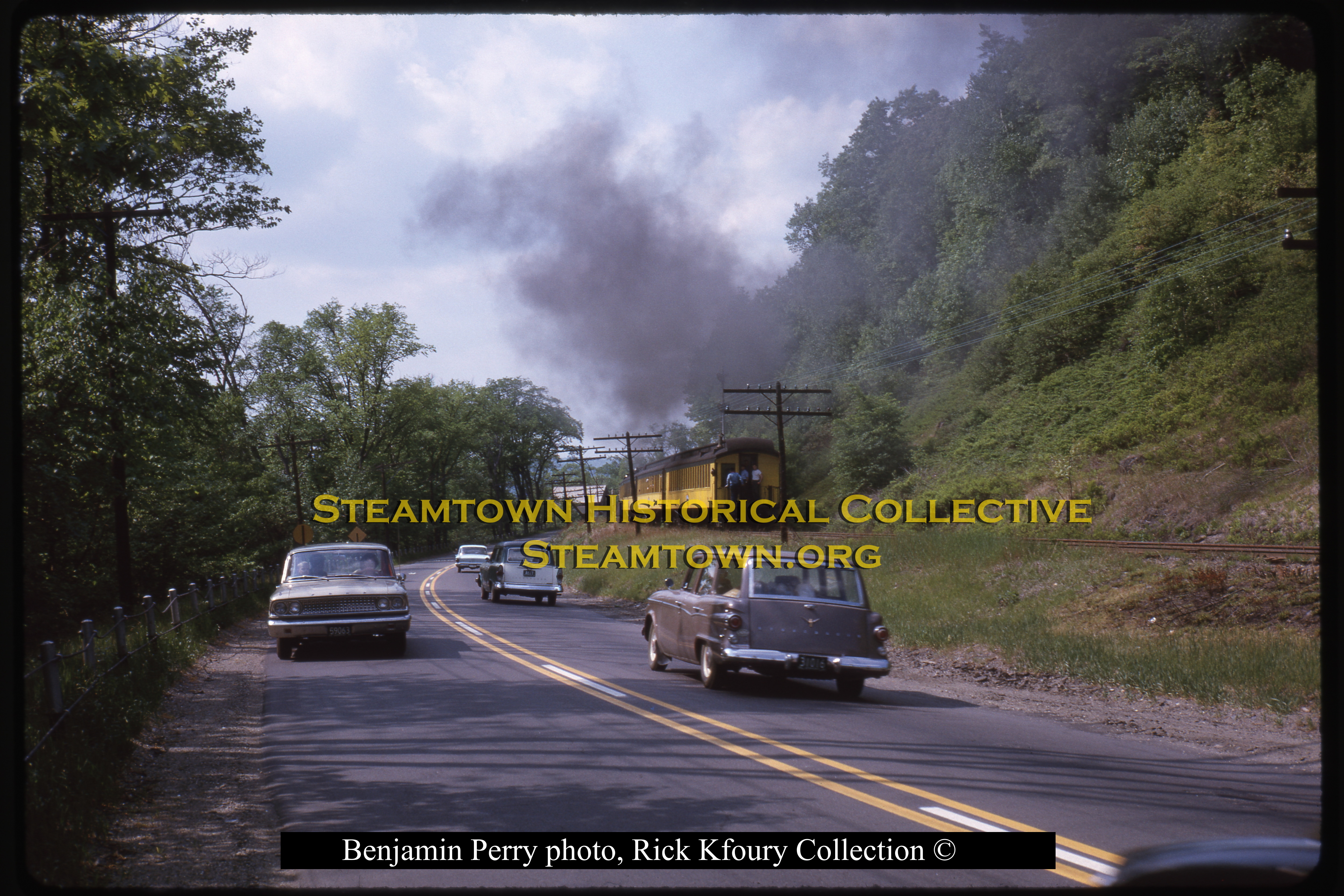
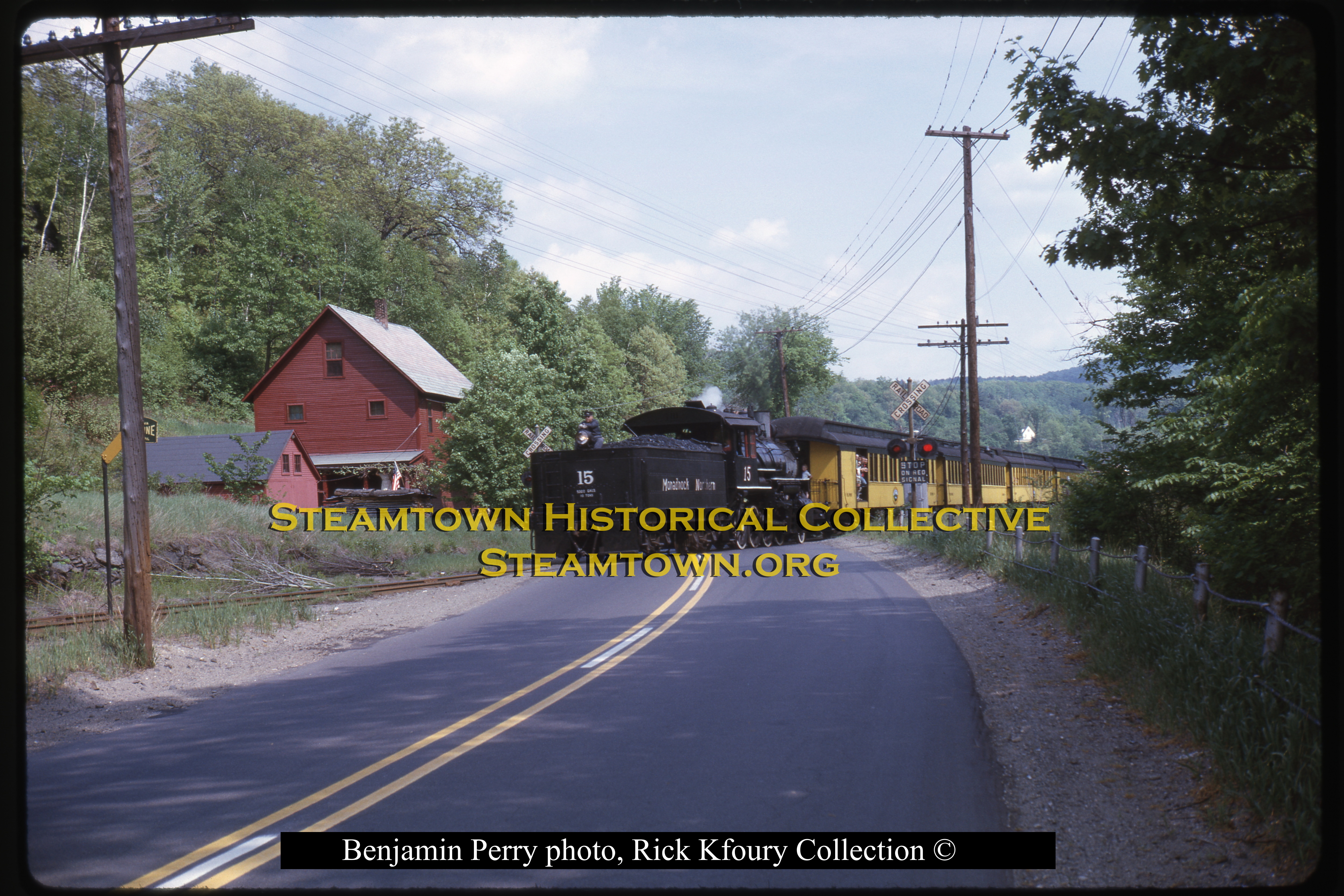
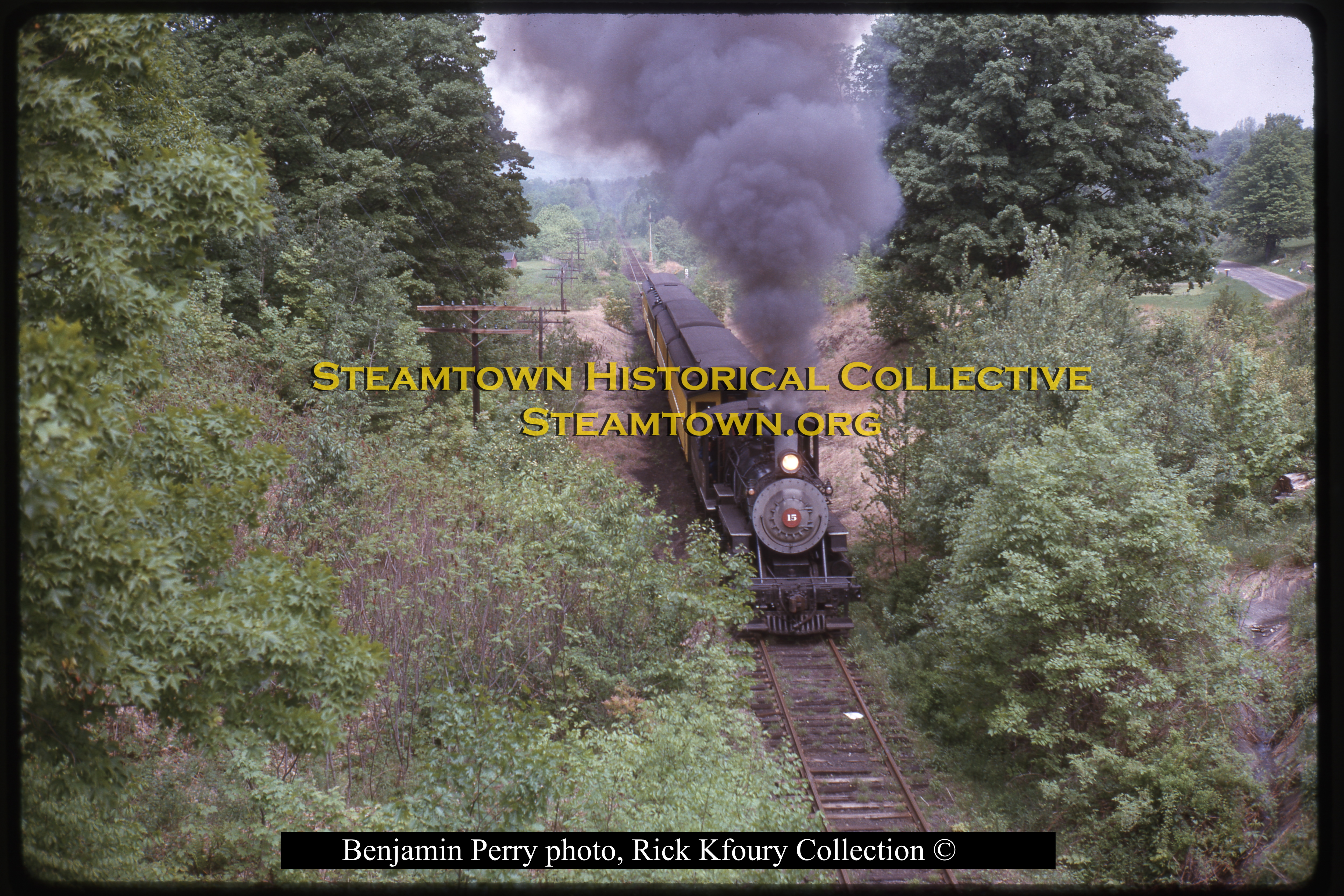
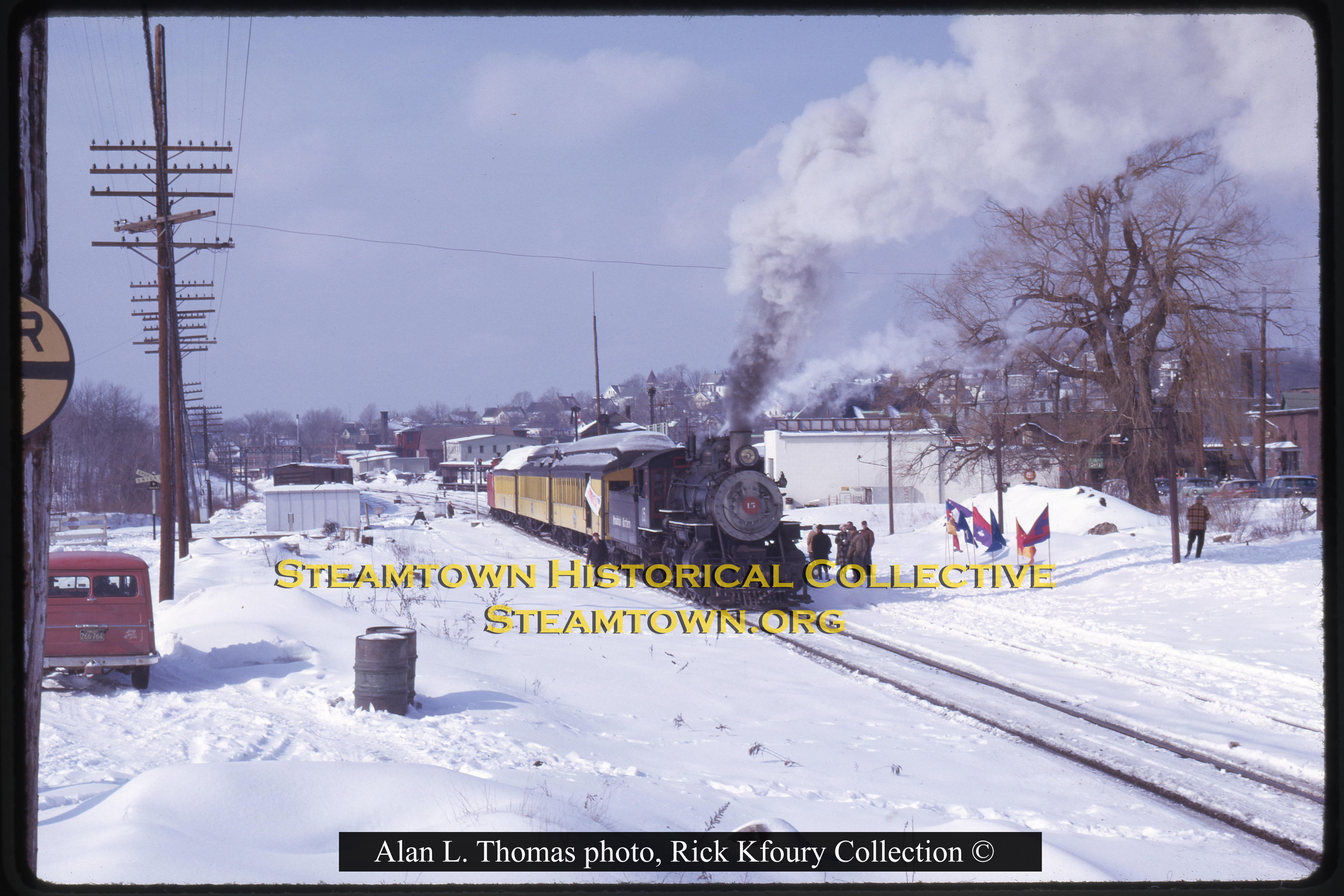
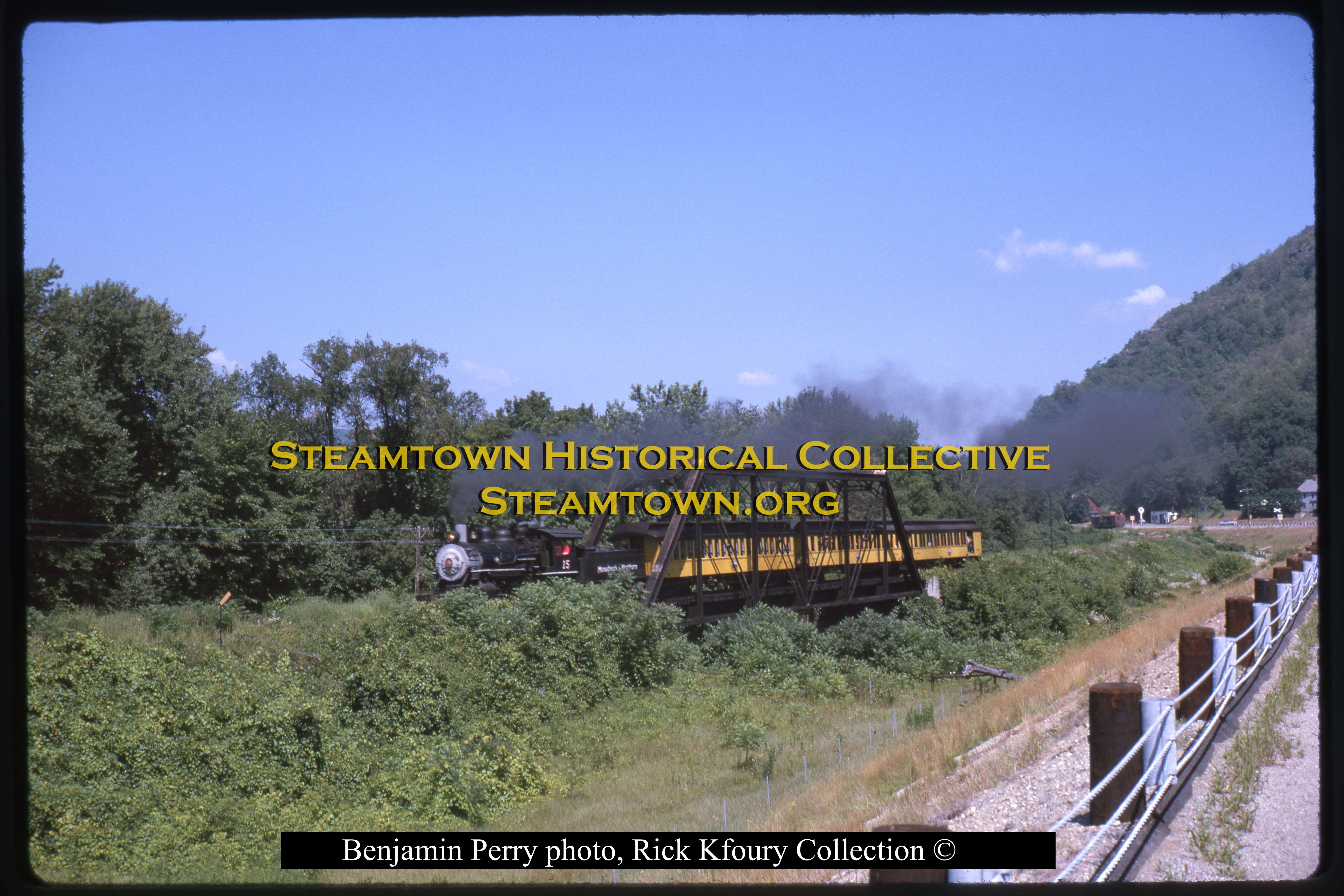
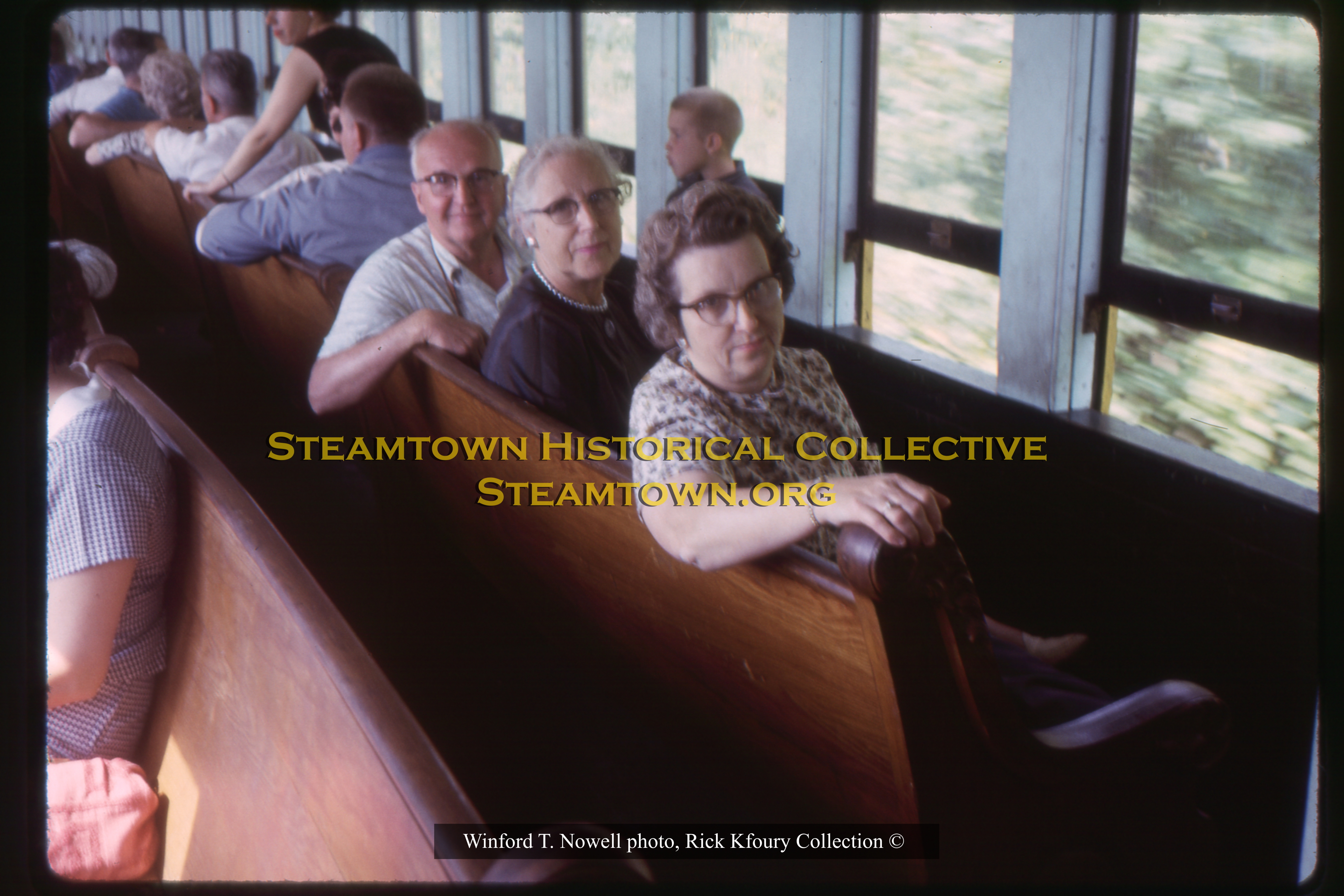
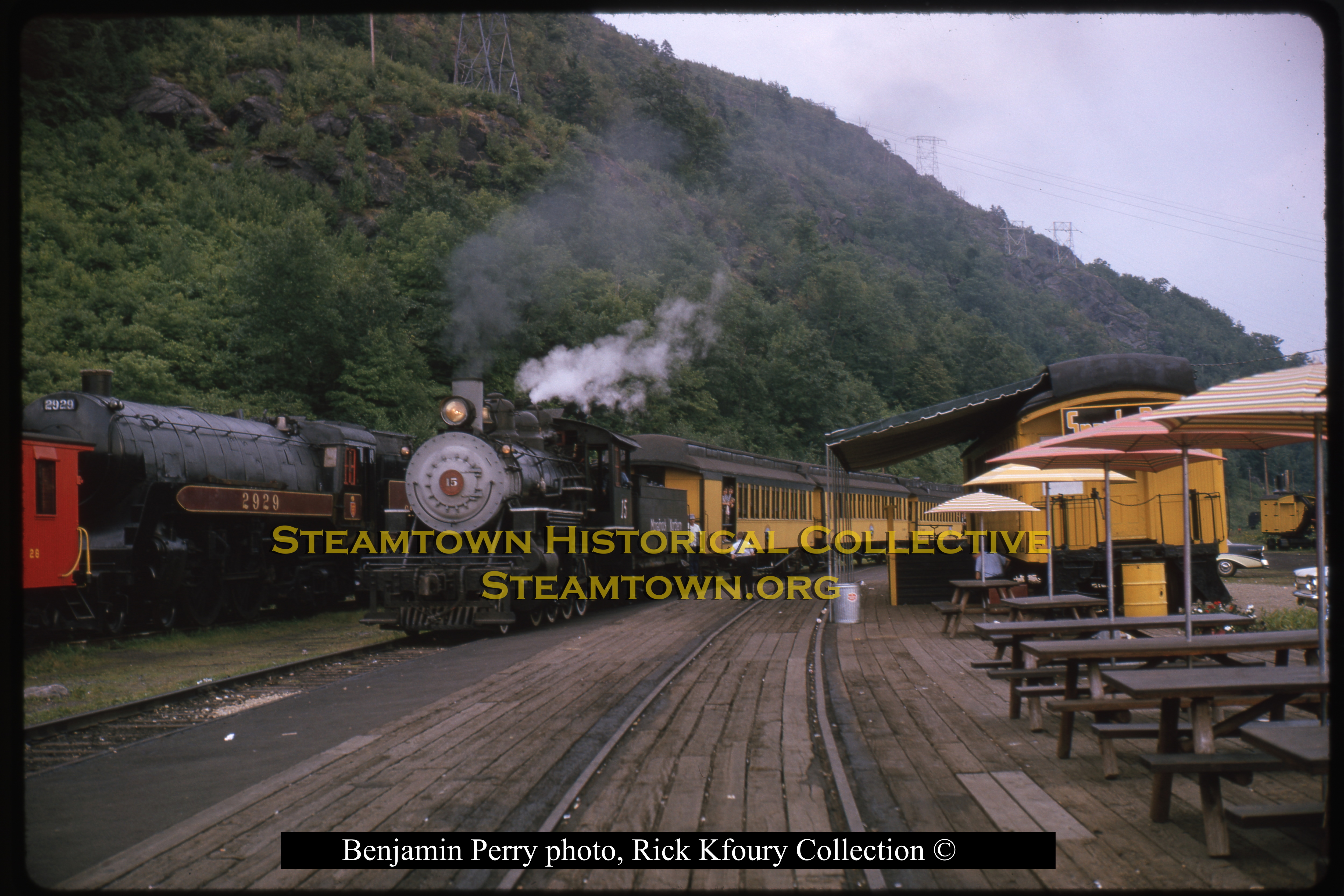
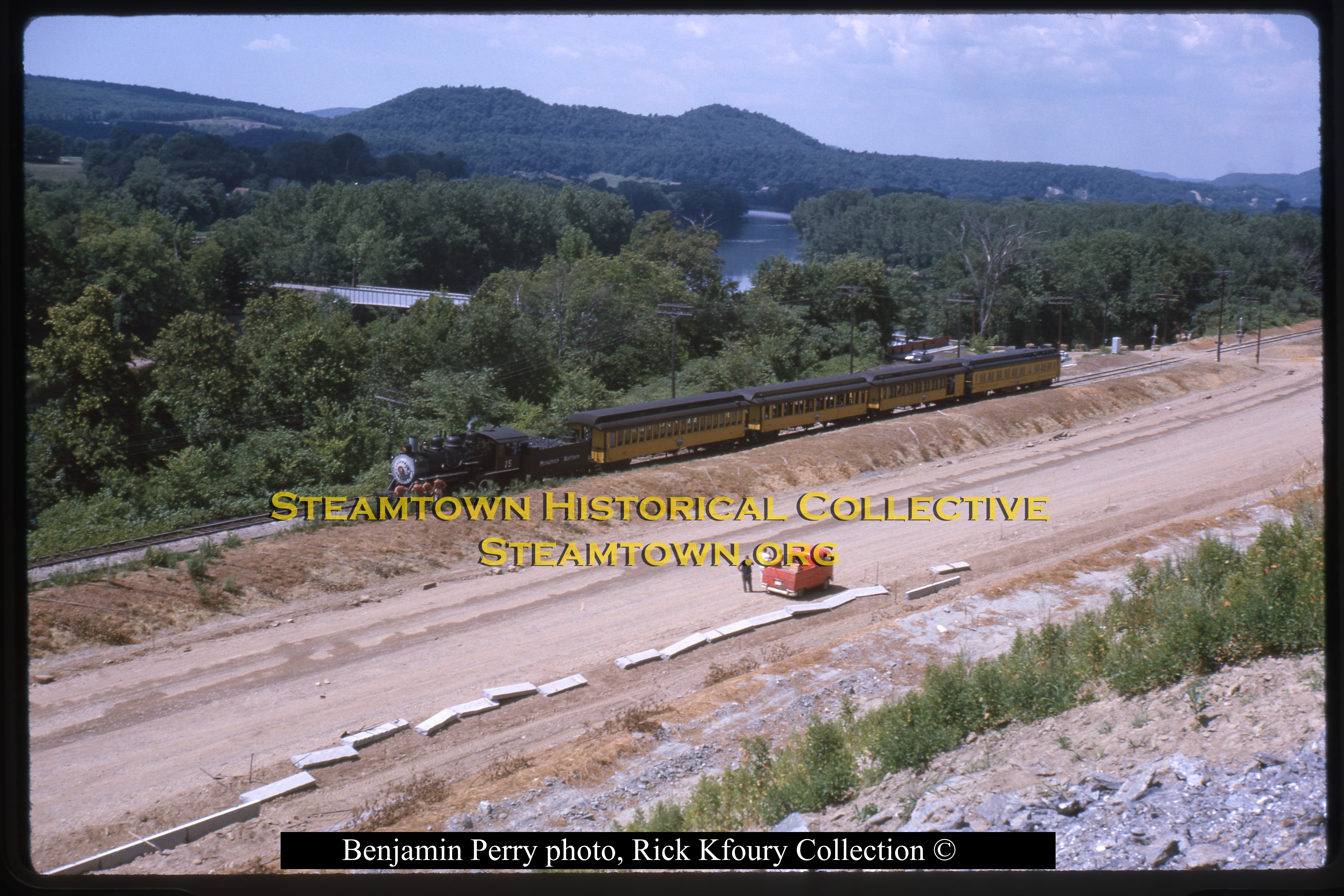
The Monadnock, Steamtown & Northern would provide steam-powered passenger excursions with 2-8-0 #15, the yellow coaches, and the diner-lounge Mountaineer. Trains would run east on the Boston & Maine’s Cheshire Branch to Westmoreland, then back to North Walpole. Fall foliage excursions ran further to Gilboa (East Westmoreland). From July 25 to July 27 the MS&N once again returned to Keene for “Steamtown Days”. Trains departed Keene and operated as far as North Walpole. Once the weekend ended the MS&N returned to North Walpole and would never again operate out of, or run to, Keene.
Word spread quickly and the new attraction at North Walpole became wildly popular. By July 25 10,000 had already visited. Earlier in the year, Blount leased #15, three coaches and a caboose to be featured in Otto Preminger’s historical epic The Cardinal. The equipment operated under its own power down the B&M’s Conn River Division Mainline to Greenfield, then was towed by an ALCo RS-3 to Boston. The #15 and three coaches would be used in scenes shot on the Boston & Albany Railroad at Trinity Place in Boston on the and on the Newton Lower Falls Branch.
Incorporation papers were filed for the “Steamtown Foundation for the Preservation of Steam and Railroad Americana”. This was to be a non-profit organization to oversee the establishment and operation of the Steamtown, U.S.A. museum. As a non-profit, the organization could now accept donations of locomotives and rolling stock into its collection. Blount turned much of his collection over to the Foundation, and served as its chairman.
Concerned about the geographic limitations of the North Walpole location, Blount began to increase discussions with the state of Vermont and its governor, Philip H. Hoff, about relocating the MS&N and Steamtown, U.S.A. across the Connecticut River to the Green Mountain State. The Rutland Railroad had recently abandoned its entire system including their Bellows Falls Subdivision between Bellows Falls and Rutland. By year’s end, Blount had successfully negotiated for an 18-acre plot of land called “Riverside” at which to construct his museum and operating rights for the MS&N on the old Rutland line. Spurred on by his employees, he also oversaw the creation of a freight railroad company, the Green Mountain Railroad, to relieve the beleaguered freight customers in the area and provide year-round employment for some of his staff. Unfortunately, tension with the Boston & Maine, who also desired to take over the freight business the Rutland had left, would cloud the transition into 1964.
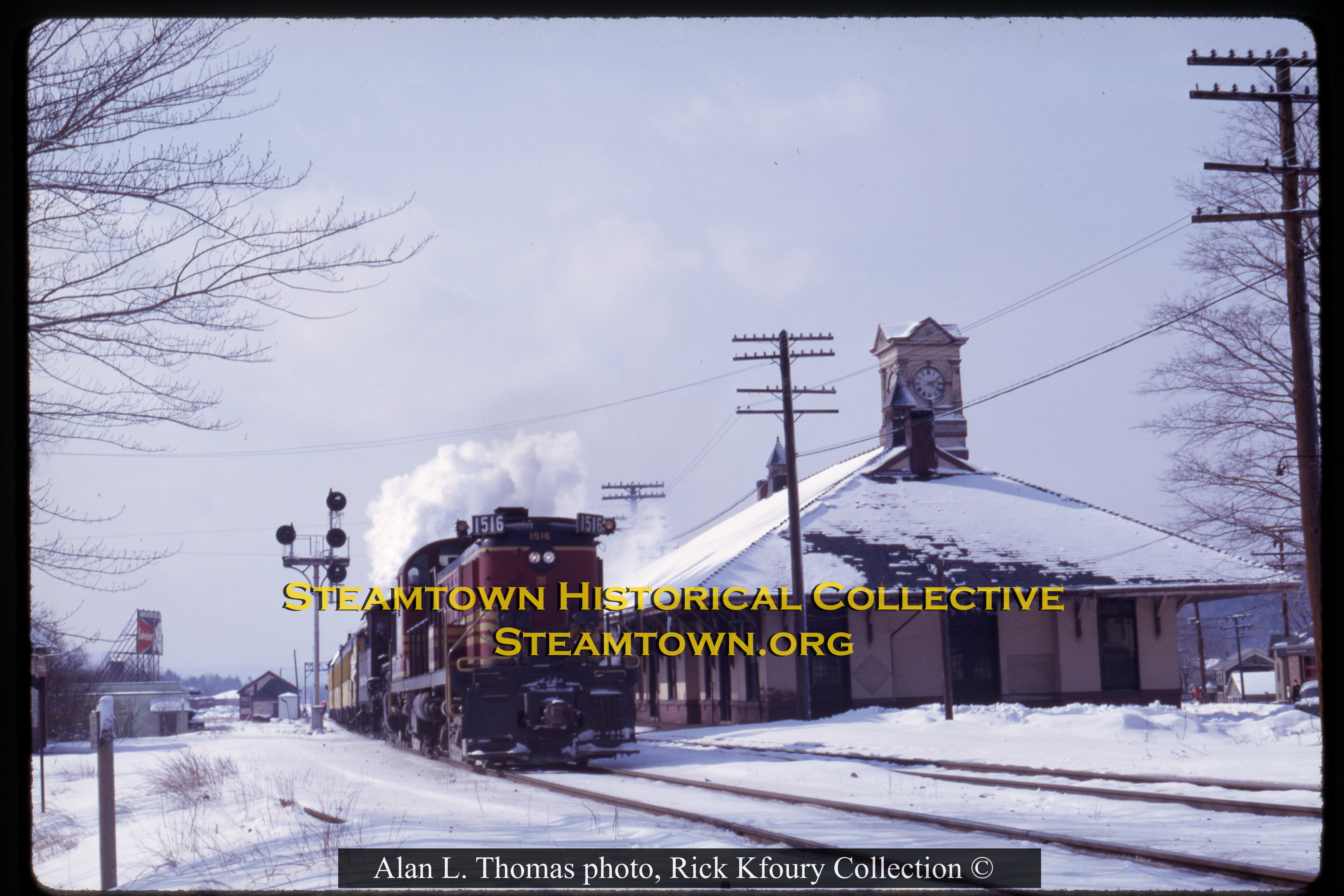
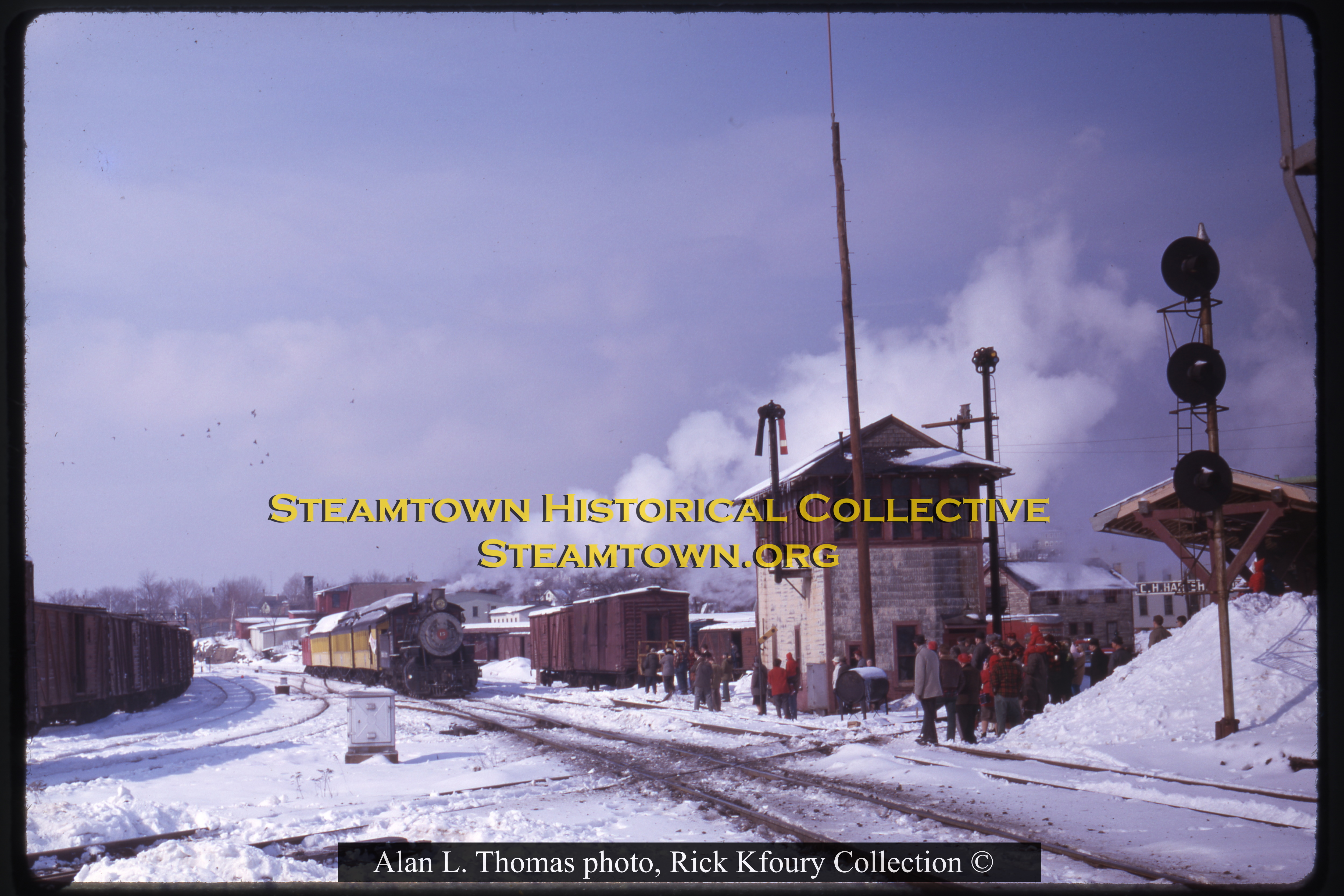
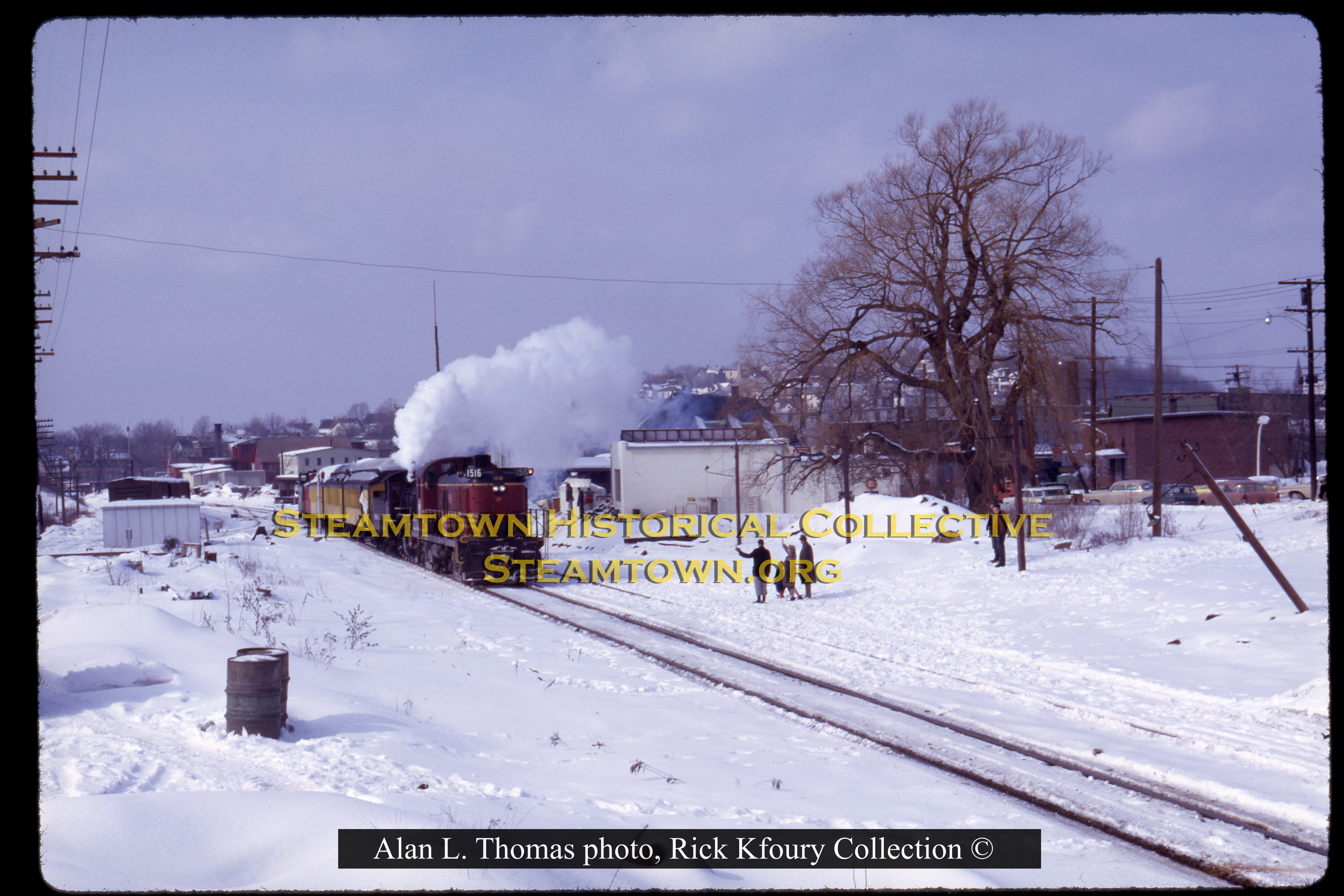
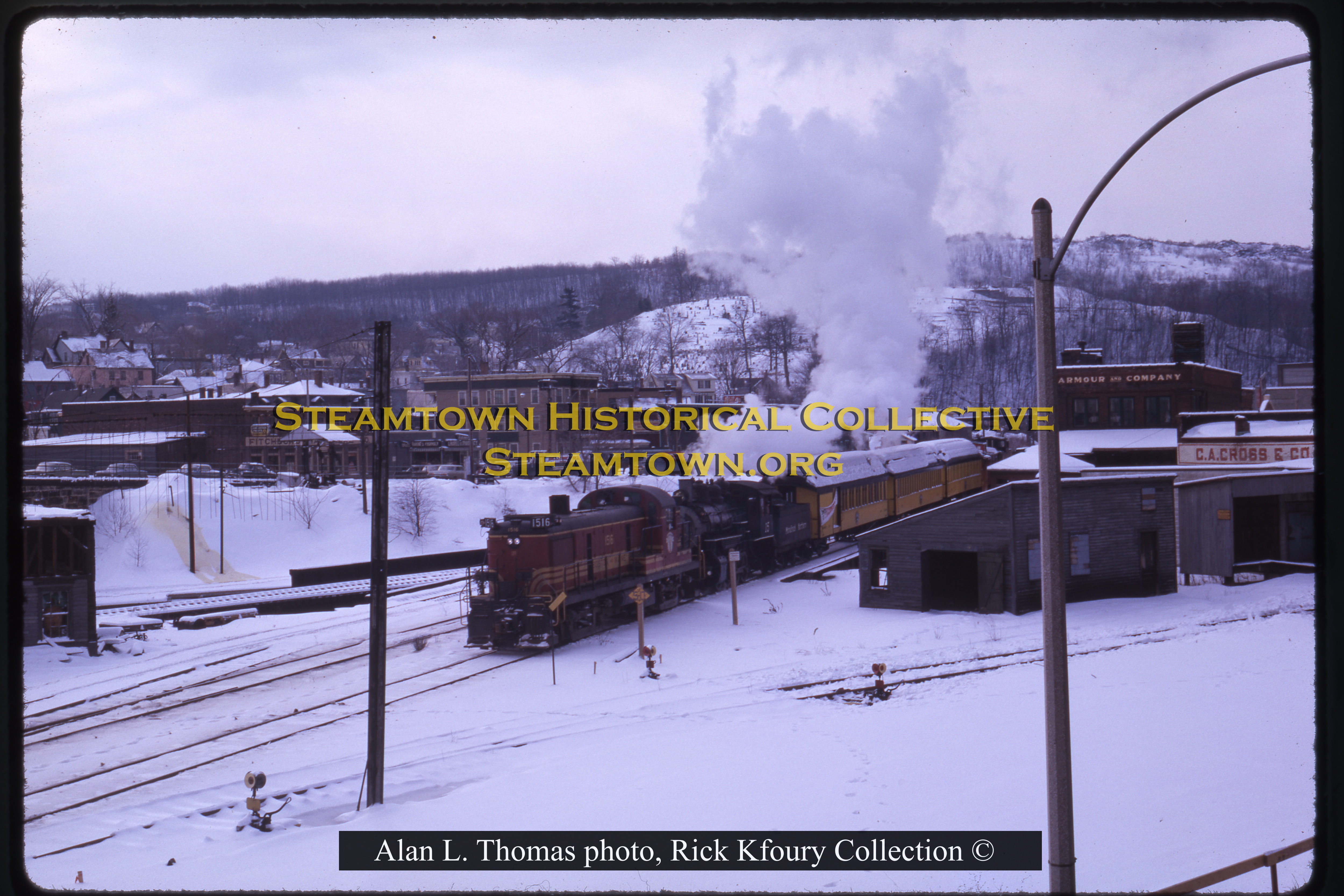
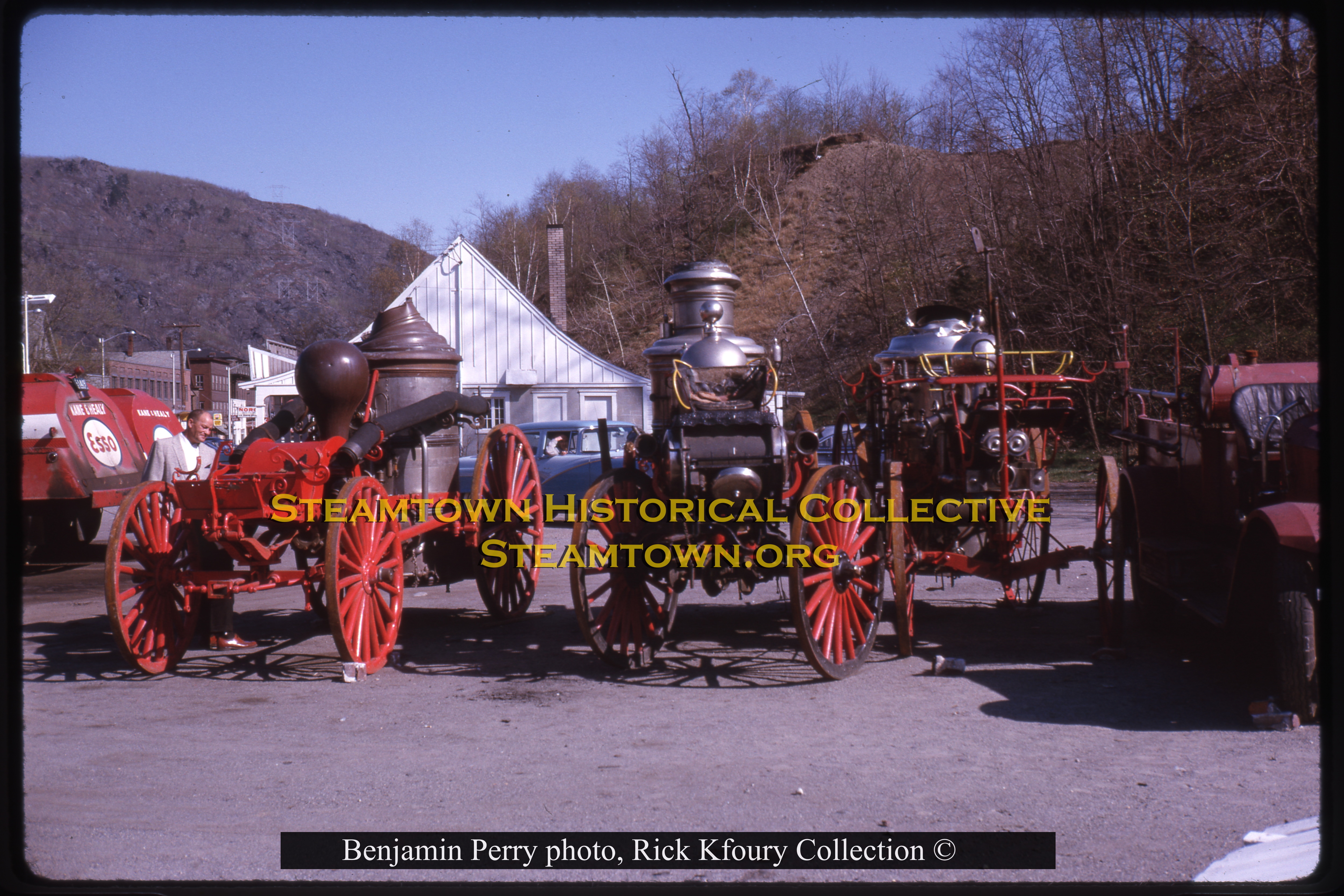
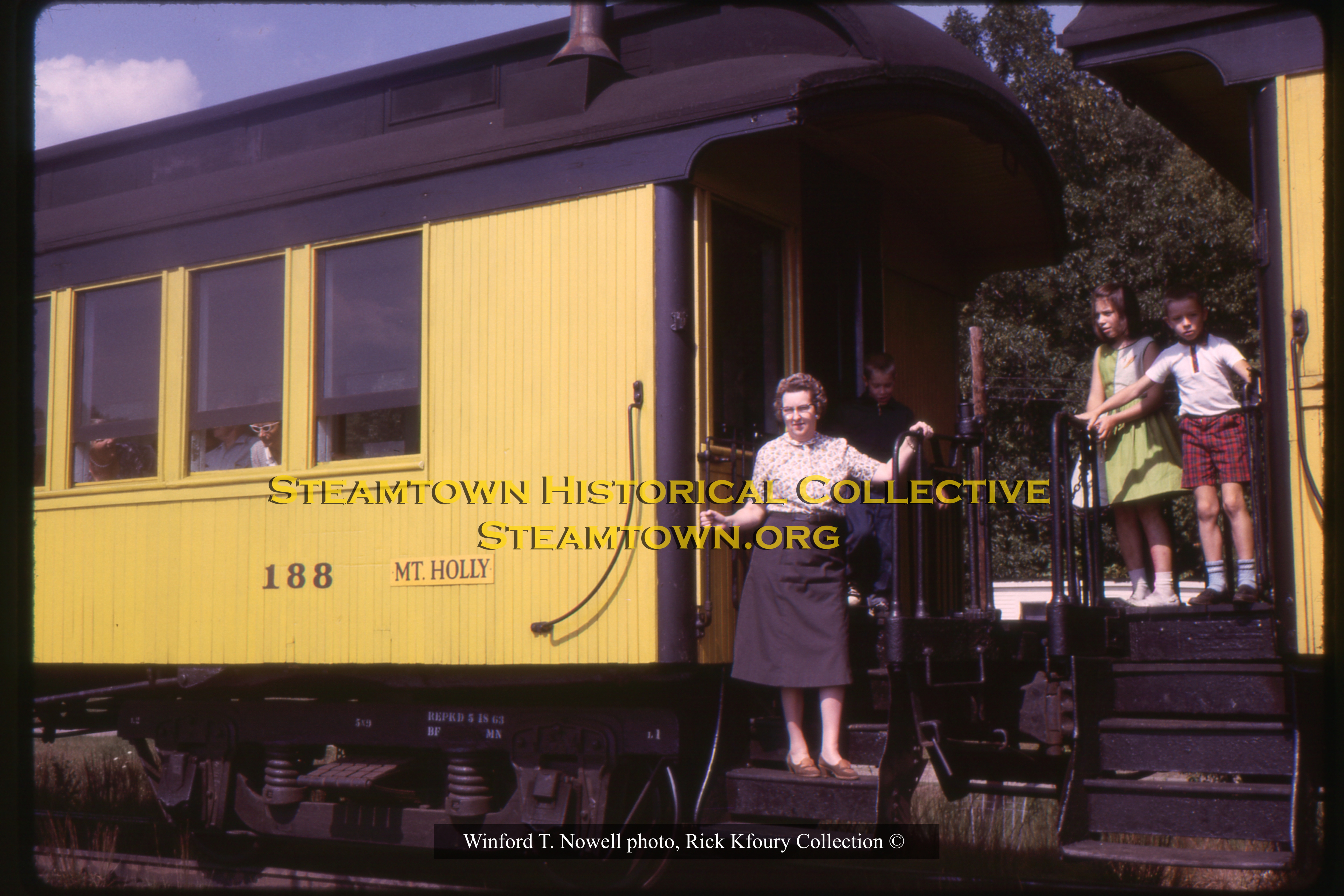
Click the gallery below to view images from 1963












 Steamtown Historical Collective